CMC legend Ricardo Quinones scripts a new life
By Alissa Sandford
When Ricardo Quinones slid into the big easy chair known as retirement he continued to write. "I have to," he said. "It's in my nature."
Within the framework of that statement, the longtime literature professor in effect finds himself creatively entwined with the masters who have become the subjects of his classroom discussions over the past 39 years -- Shakespeare. Dante. Chaucer. Meaning, that for him, turning to pen and paper is more about artistic necessity than choice. "Even if you wake up with a headache, feeling bad,” Quinones says, “as soon as you begin writing, you feel good. It's unlike anything else."
Author Charles Johnson (left) paid a tribute to retiring literature professor Ricardo Quinones at the Ath. Johnson remarked that evening that Quinones has
This passion is part of the legacy Quinones will be remembered for when he retired from Claremont McKenna, and it was the subject of a recent tribute to him at the Marian Miner Cook Athenaeum featuring award-winning author Charles Johnson. Of course, Quinones also leaves behind profound influence as the person who set the course for The Family of Benjamin Z. Gould Center for Humanistic Studies on CMC’s campus. As its former director, he oversaw the distribution of grants to faculty members for summer research, and monies to four Dunbar fellows - students working on research projects under the Gould Center’s sponsorship.
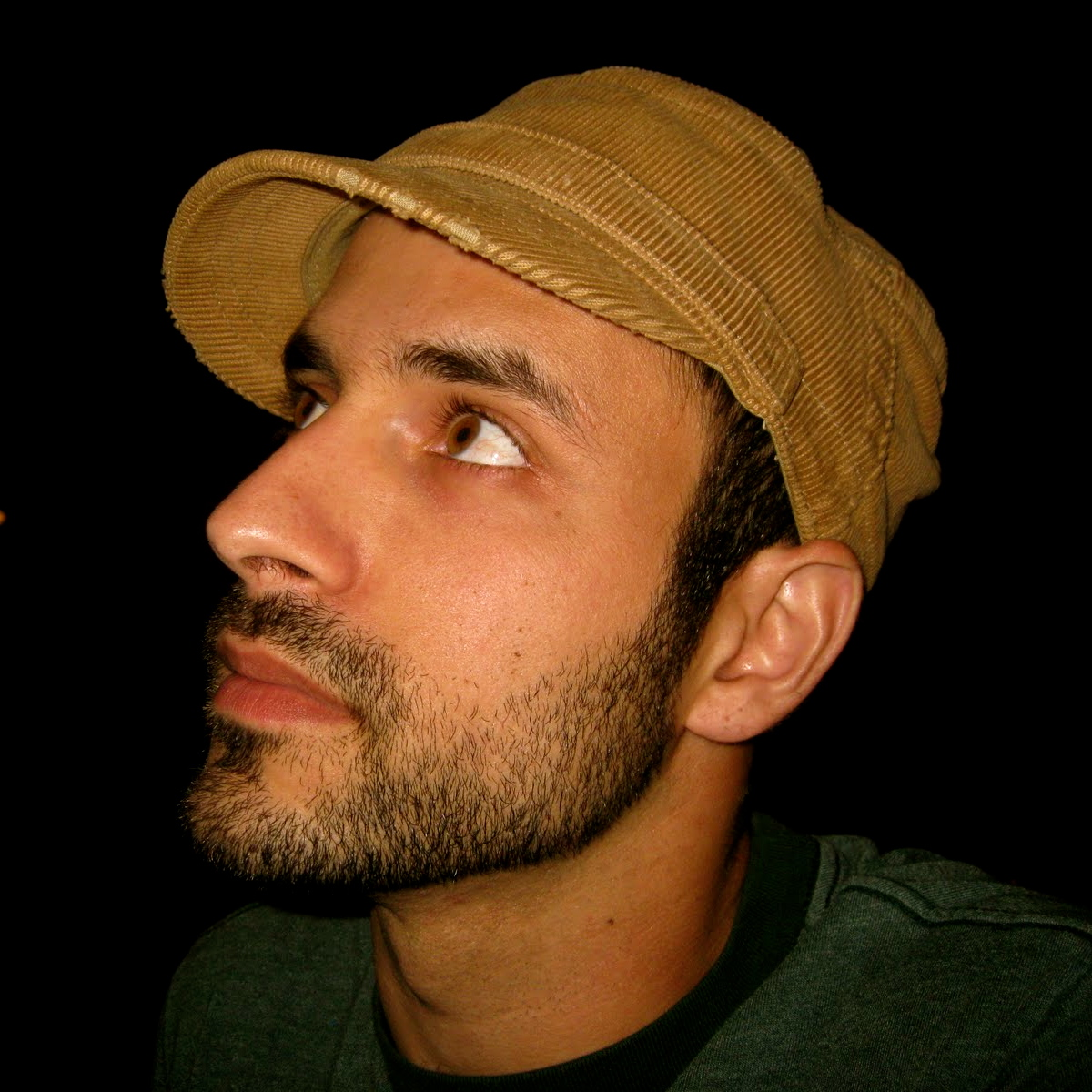
After a morning stroll through a Claremont neighborhood, Quinones sat thoughtfully in an office on campus, boiling the past, present, and future down to this statement. “The way I put it at the Board of Trustees retreat,” says Quinones, his signature white beard tilted toward the ceiling, “is that the Great Run of the 60s is over, and we're now entering a new epoch, a new era. And I have high expectations for this new epoch and this new era.”
CMC on the other hand, lost a legend. With nearly 40 years of experience on his vitae, he was one of the most seasoned fixtures on campus - someone who has eyed the College from all different angles. “CMC went through many changes in my time,” says Quinones. “When I came here it was an institution of 400 students. Now it's 1,100 going on 1,200 or 1,300. All of this is to the good. I would say our generation - the generation that came into maturity in the 1950s and1960s - we did the job well. “The students are just as smart, if not smarter than ever,” he says of CMCers.
“What I admire most about Rick is simply that he lives life as well as anyone I’ve ever known,” says Gould's assistant director Richard Drake, who has known Quinones for more than 25 years. “What I mean is that he lives joyously. And why wouldn’t he? He has great friends because he is a great friend . . . As a teacher,” Drake says, “he possesses the most commanding classroom presence I have ever encountered.” And as a visionary for the Gould Center “he has enhanced beyond measure the lives of untold numbers of students, colleagues, and others in the community.”
The foremost purpose of the tribute to Quinones was to pay respect to his legendary status on campus, but secondly for author Johnson to express the indelible effects that Quinones had on his - and certainly other students1 - life.
Calling Quinones a “hero who has enriched my life and work on at least three occasions,” Johnson shared with guests the story of how Quinones’s insights in his 1991 critical study, The Changes of Cain: Violence and the Lost Brother in Cain and Abel Literature, guided him through the process of writing his own novel, Dreamer. It also supplied him with intellectual fodder needed for the taping of a PBS special he participated in about Biblical brothers Cain and Abel.
The timing was back in 1995, when Quinones had invited Johnson to campus to discuss American author Ralph Ellison. Johnson was then researching and writing Dreamer, a story about Martin Luther King Jr.’s Chicago campaign in 1966, and also the story of a man who takes on the job of serving as his double. It was during the visit that Quinones gave Johnson a copy of Cain, which lead to a creative epiphany against the boyhood lessons Johnson had been taught in the South; that slavery could be justified because Cain was black - a distinguishing “mark” given to him by god as punishment for killing his brother.
Johnson says that Quinones’s exhaustive examination of Cain gave him the courage philosophically and personally to confront this ancient myth concerning blacks. “Furthermore, and most important of all,” Johnson said, calling Cain a “triumphant work of hermeneutics,” Quinones’s study “outlined for me the crucial transformation that Cain underwent from the early Christian period to the Romantic period, which redeemed him as a metaphysical rebel; as a revolutionary; as the embodiment of rationality, individualism, subjectivity, and science; as a questing, dissatisfied consciousness.”
At his tribute, Johnson paid Quinones the ultimate compliment when he told the professor how his scholarship and person “made me happy. And,” Johnson said, “Dreamer would have been impossible without you.”
Quinones has had lots of time lately to start writing the next chapter of his life, so to speak, investing considerable time to his forthcoming book, Dualisms, an outgrowth of the Cain study. Like all his books, Dualisms’ subject matter is expectedly heady, dealing with important figures from important epochs. In it, Quinones is arguing that these people at one time were thought to be allies – comrades in arms in the vanguard reform movement of their day - but temperamentally were deeply divided. “And then something happens,” Quinones says, “and these figures end up in cosmic warfare, defining the debate of the ages.”
He’s been working on Dualisms for three years and suspects it will take another two to complete. The key to writing any of his books, including his first, The Renaissance Discovery of Time (1972), is to “wake up with a clear head in the morning,” Quinones says. “I only write in the morning, and if I could write three or four hours a day, I feel I'm blessed.”
Reading the works of Dante and Shakespeare remain inspiring, though he admits his tastes in literary cuisine are “quite ecumenical.” Says Quinones, “There are many writers that I like, and they all make -particularly if you're dealing at a very high level - they all make very important contributions.”
Asked if he ever critiques his own writings, Quinones laughs. “All the time,” he says. “It's at times so damned boring!”
Perhaps it’s that kind of blunt honesty that students will remember about Quinones. He is a professor who’d rather that his students read Cliff Notes on Shakespearean plots than repel from the plays otherwise. (“If it gets them to read the play, I don’t care. But the important thing is to read the play.”) And he is not above personally thumbing through a thesaurus when the need for a word strikes.
“Get all the help you can,” he says, smiling. “In fact this morning, I was looking for another word for convoluted.” So listen, use anything (for inspiration) - this is the way I’ve taught in the classroom.”
In an excerpt from an alumni magazine article, longtime member of the Board of the Gould Center, Jeff Klein, 1975, recalls taking Quinones’s Lit 10 class. What amazed him was that on the first day, this “radical-looking” professor knew the names of each of his students. He had studied their photos in the College’s freshman look-book. “Imagine,” Klein wrote, “any other professor doing that at Stanford or UCLA.”
As of next month, there won’t be any more faces or names to remember. Quinones thinks about his goal for retirement and smiles again. “Survival. Survival. Survival,” he says. “I have a successful retirement. It's hard to have a successful retirement, but I think in this case I'm very fortunate in that when I retire, I'm only retiring from one of my functions, which is teaching. I'm not retiring from writing or going to conferences and giving lectures, and meeting with the scholars.”
And on his decision to make CMC his home?
“I have to say that here is where I've lived form more than 40 years,” says Quinones, before heading off for another neighborhood stroll. |